Fork calibration
World map
Emil art ref
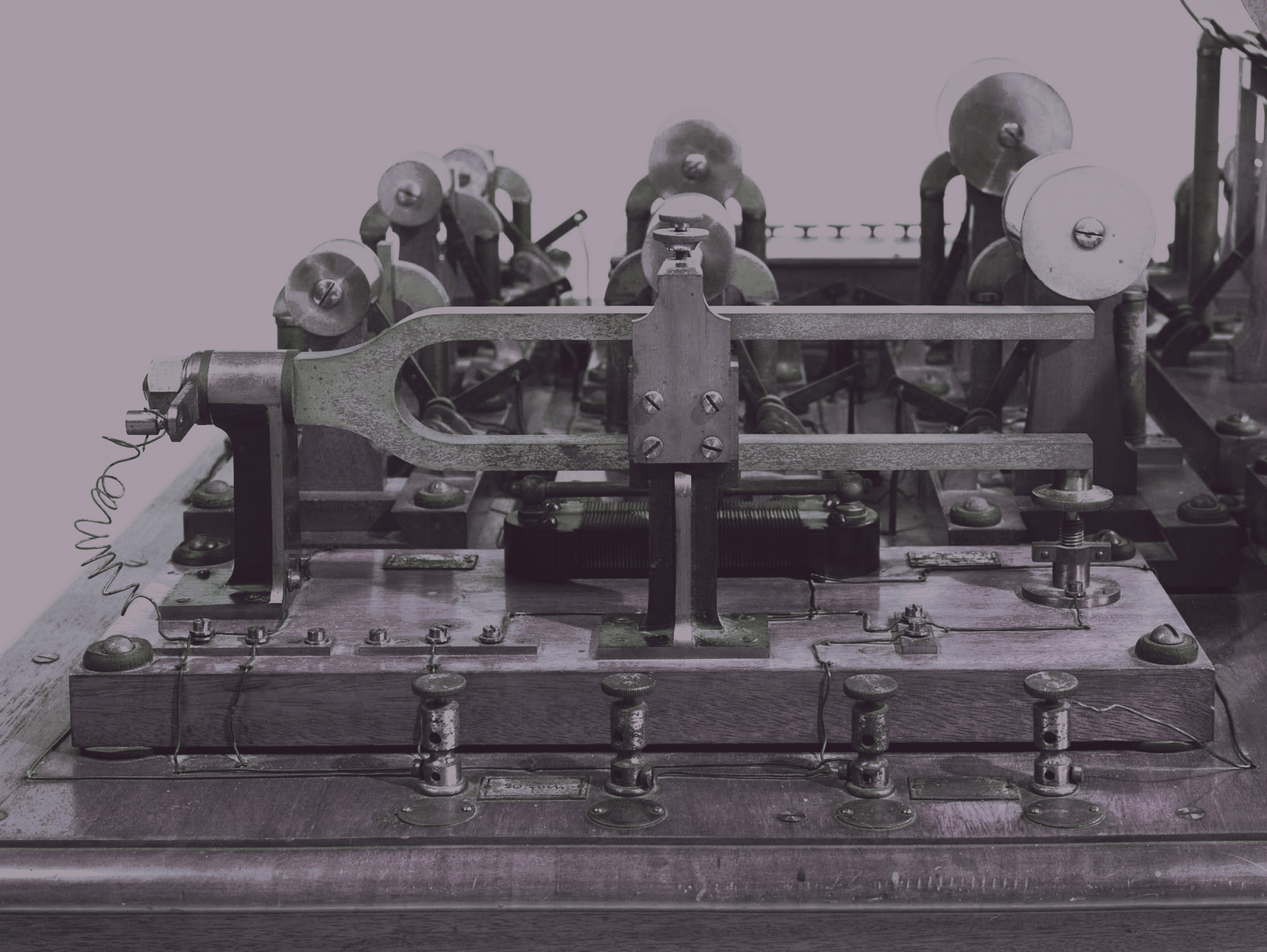
The history of ether detection instruments perfectly illustrates that of relikae as a whole: exponential design complexity, all for diminishing returns in both precision and cost-saving. The sole exception being control forks.
Contemporary metallurgy techniques have not only increased these deceptively simple tools' durability and reading range; with far greater control over the purity of their base material, their production process can now be entirely automated, calibration included. However, while such a process easily fulfills the demand of most schools and the general public, manual calibration and testing is still the norm in fields where high-precision readings are critical.
The above photography depicts Dr. A.C. Xanbi's famous "Cymbal" prototype (nicknamed as such due to its clever use of intermediate disc-shaped resonators): the very first fork calibrator to rely on unit blocks rather than unaided hearing, allowing for quasi-perfect adjustments even by a completely deaf technician. A marvel of enginering that, at the time of its conception, almost ruined Xanbi with the then outrageous cost of its components.

World map
Emil art ref